Like I said, politics plays a part but there is more to that.
Maybe if you took off your bias glasses you would see that... I'll let AI explain:
Yes—
some of those factors are influenced by policy, but not all of them. The best way to think about California gas prices is that
structural/geographic issues set a high baseline, and
policy choices add additional cost on top of that.
Here’s how those five factors break down.
1. Geographic isolation from U.S. pipelines
Mostly not political.
California is separated from the big Gulf Coast refining region by the Rocky Mountains and deserts. That makes pipelines like the Colonial Pipeline (which serves the East Coast) impractical to build across the entire country.
There has never really been a major pipeline proposal connecting the Gulf Coast to California because:
- distance (~1,500+ miles)
- mountains
- cost vs shipping
So this is largely
geography and economics.
2. Limited refining capacity
Partly policy, partly market economics.
Refineries run by companies like Chevron, Marathon Petroleum, and Valero Energy have closed or converted some plants.
Reasons include:
- declining gasoline demand expectations
- high environmental compliance costs
- corporate strategy to shift to renewable fuels
Permitting and environmental rules make building new refineries difficult, so
policy plays a role, but companies also decide based on profitability.
3. Huge gasoline demand
Not political.
California simply has:
- ~40 million people
- massive car usage
- large suburban regions
Even if policy changed tomorrow, it would still be
one of the largest gasoline markets in the world.
4. Higher business and land costs
Mostly economic, partially policy.
Things like:
- land prices
- wages
- insurance
are generally higher in California’s economy.
Some regulatory requirements for gas stations also increase costs, but much of it is simply the
overall cost of doing business in the state.
5. West Coast crude supply dynamics
Mostly geology and geography.
California refineries historically used oil from places like Alaska North Slope.
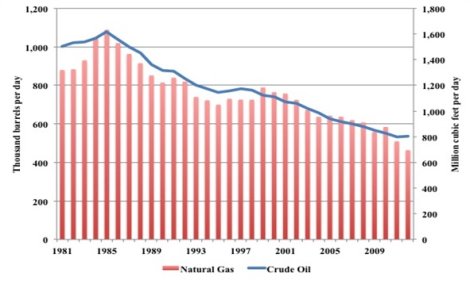
Production there declined over time, so refineries import more crude by ship. That’s largely due to
resource depletion and global oil markets, not state policy.
 Summary
| Factor | Politics involved? |
|---|
| Geographic isolation | No |
| Limited refinery capacity | Partly |
| Huge demand | No |
| Higher business costs | Partly |
| Crude supply dynamics | Mostly no |
So the reality is
mixed:
- Geography and market structure explain a big part of California’s high gas prices.
- Policy choices add additional cost and make supply tighter, which can amplify price spikes.
A useful way analysts describe it: California’s gas market has a
“high structural floor” (geography + infrastructure), and policy determines
how much higher prices sit above that floor.