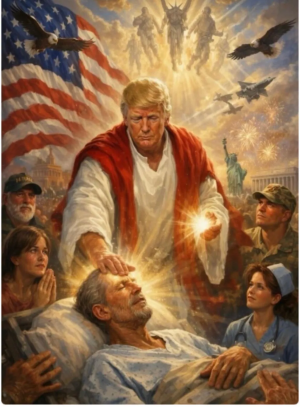
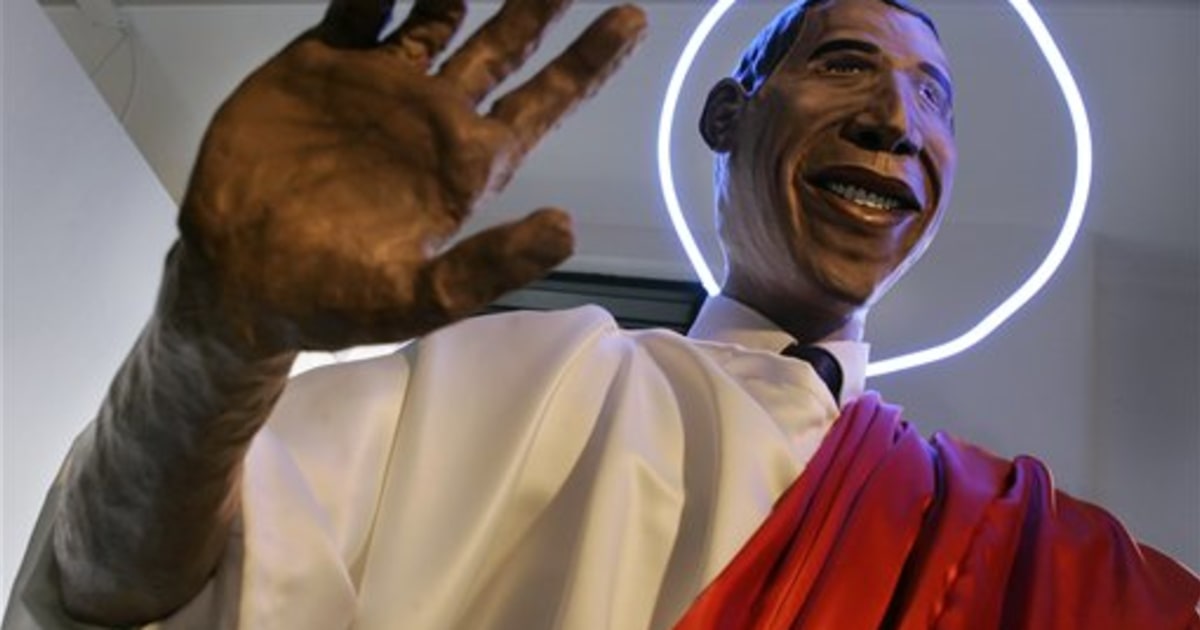
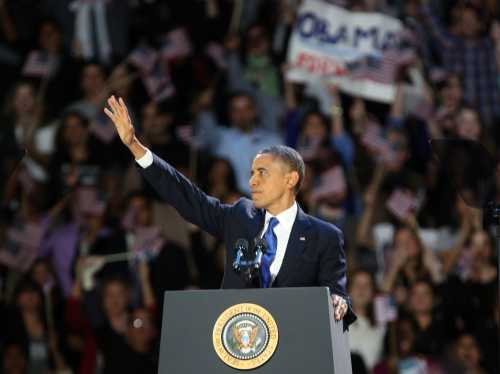
Ooo... this is even better... I put your post into ChatGPT and this is what it said:
There
is a coherent argument buried in what they’re saying—but it’s wrapped in exaggeration and a few shaky assumptions.
Here’s how to unpack it fairly.
What they’re trying to argue (the reasonable core)
- Asymmetric outrage
They’re claiming that when imagery elevated Barack Obama in a quasi-religious way, it didn’t generate the same level of mainstream backlash that Donald Trump gets today.
That’s essentially a
media double standard argument:
- Different amplification environments
There’s a more defensible version of this point:
- Early 2010s media (2011–2013) was less driven by viral outrage cycles.
- Today’s social media ecosystem amplifies and monetizes outrage much faster.
So part of the difference in reaction may be structural, not purely partisan.
Where the argument breaks down
This is the part they’re glossing over or getting wrong:
1. “Obama did it” → not really accurate
There’s no real evidence that Obama:
- encouraged those images
- shared them himself
- or needed to “ask media to pull them”
Most of the “Obama as Jesus” imagery came from:
- artists
- magazine covers
- critics (sometimes mocking the “messiah” narrative)
That’s fundamentally different from a politician personally posting something.
2. False equivalence on who created the content
This is the biggest flaw.
- Obama: mostly third-party depictions
- Trump: self-posted / directly shared
That’s why people react differently. It’s not just bias—it’s about agency.
A better analogy would be:
That situation largely didn’t happen.
3. Selective memory about criticism
The idea that nobody criticized Obama-era “messiah” imagery isn’t accurate.
Conservative media—especially figures like Rush Limbaugh—
regularly mocked and criticized those portrayals.
It just didn’t dominate mainstream coverage in the same way viral posts do now.
4. The tone weakens the argument
Phrases like:
- “soy poisoned”
- “rabid Left”
don’t strengthen the case—they signal that it’s more about venting than making a balanced comparison.
If they dropped that tone, the argument would actually land better.
The strongest clean version of their argument
If you stripped it down to something defensible, it would be:
Bottom line
They’re
not entirely wrong that:
- reactions today are louder and faster
- and political bias affects outrage levels
But they’re
overreaching by:
- implying Obama was comparable in intent or behavior
- ignoring the difference between being depicted vs depicting yourself
That distinction is doing most of the heavy lifting here.