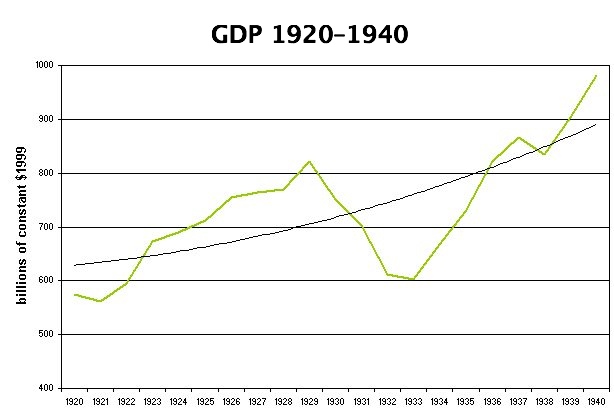
Hoover’s fiscal policy accelerated the decline. In December 1929, as a means of demonstrating the administration’s faith in the economy, Hoover had reduced all 1929 income tax rates by 1 percent because of the continuing budget surpluses. By 1930 the surplus had turned into a deficit that grew rapidly as the economy contracted. By the end of 1931 Hoover had decided to recommend a large tax increase in an attempt to balance the budget; Congress approved the tax increase in 1932. Personal exemptions were reduced sharply to increase the number of taxpayers, and rates were sharply increased. The lowest marginal rate rose from 1.125 percent to 4.0 percent, and the top marginal rate rose from 25 percent on taxable income in excess of $100,000 to 63 percent on taxable income in excess of $1 million as the rates were made much more progressive. We now understand that such a huge tax increase does not promote recovery during a contraction. By reducing households’ disposable income, it led to a reduction in household spending and a further contraction in economic activity.